
CPO optical interface assembly & test.
Inspection, high-channel-count fiber-to-PIC alignment, fiber-harness assembly, bonding, curing and optical verification for CPO optical engines and detachable high-density optical interconnects — from process development to mass production. Engineered and manufactured in Germany.
Many production steps. One supplier.
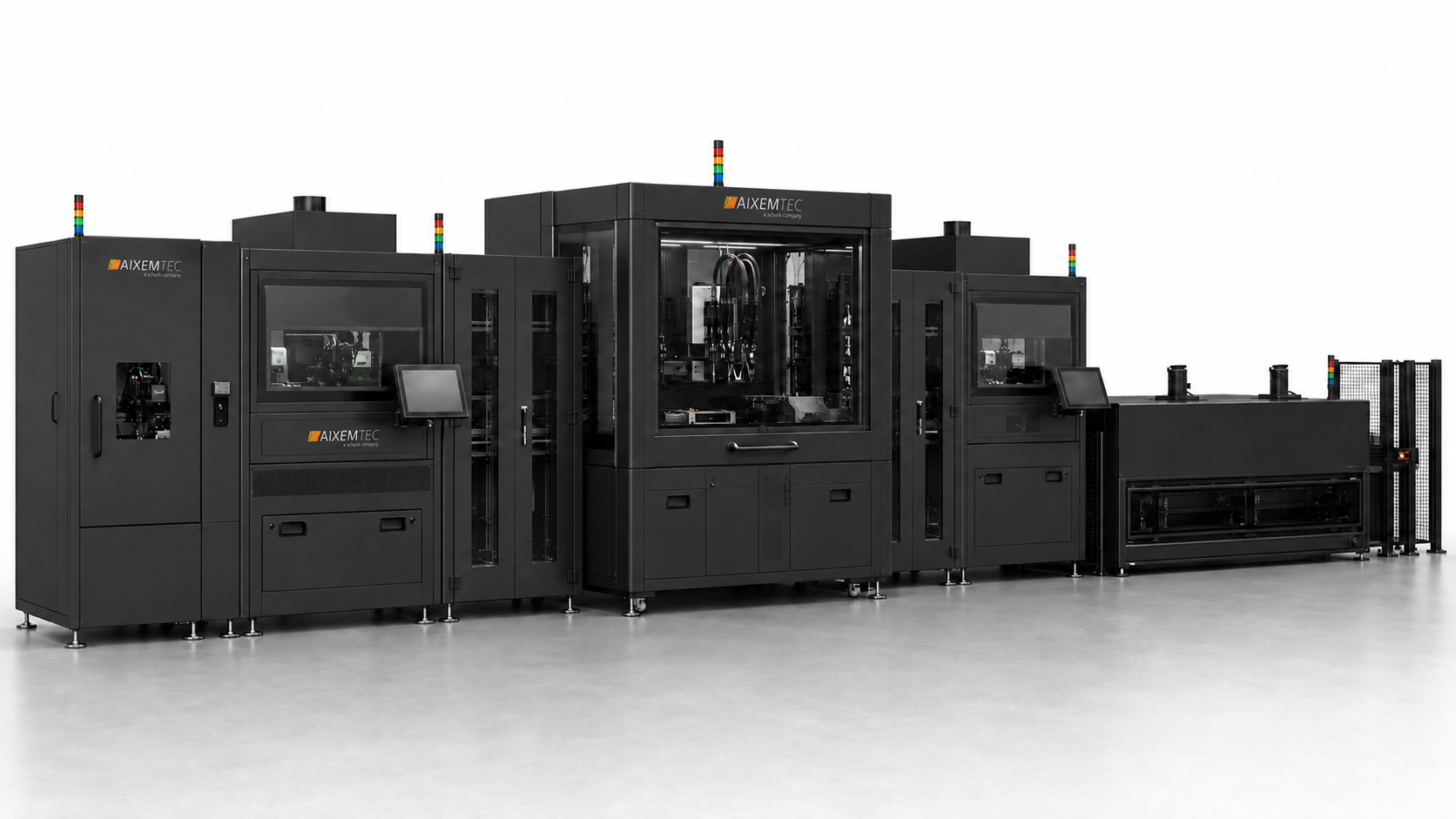
FAU / PMLA / Alignment Plate / Receptacle / Fiber-Harness Components
Qualified Optical-Interface & Fiber-Harness Assemblies
Parts and fibers in at the front, qualified optical-interface and fiber-harness assemblies out at the back. Built from one modular platform family, so the process qualified during pilot / NPI can be transferred into mass production (MP) and high-volume manufacturing (HVM).
Where CPO yield is won or lost
In CPO, high-density optical interconnects connect optical engines close to switch or compute ASICs. Detachable high-density optical interconnects and fiber harnesses can reduce packaging and service constraints, while similar optical interfaces are moving toward accelerator / xPU scale-up architectures as optical I/O advances. NPO keeps the optical engine close to the ASIC and faces many of the same fiber-to-PIC, alignment and attach challenges. Alignment tolerances are single-mode, incoming components carry mechanical tolerances looser than the optical requirement, and once an optical engine, alignment plate or receptacle component is bonded, rework can be difficult. That moves cost and risk into assembly and test.8
Post-bond shift
Alignment has to survive the bond
Adhesive shrinkage, thermal mismatch and stress relaxation move a perfectly aligned component while the joint cures. The number that determines shipped performance is post-bond accuracy, not alignment accuracy.
High-channel-count fiber arrays
Every channel, simultaneously
1D and emerging 2D fiber-array units (FAUs) must hold coupling across all channels at once, including angular effects that grow with array width. A budget that works for one channel does not automatically hold for a high-channel-count interface.
Yield stacking
Failures must be caught in-process
Across five to ten precision steps, even high per-step yield compounds downward. A bad part found at final test carries the full cost of everything already assembled into it.
Every step covered, on one platform family
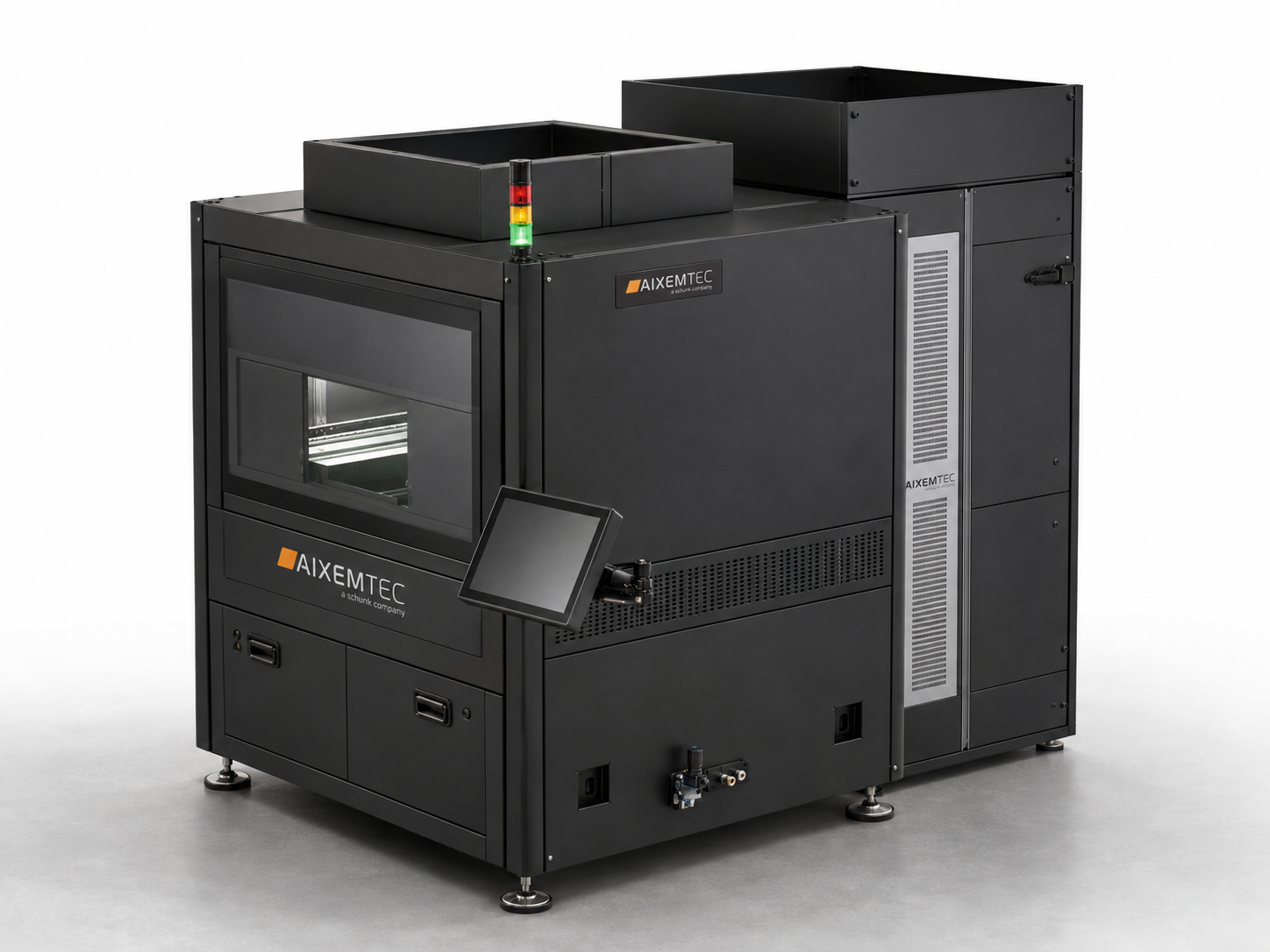
Cleaning
Cleaning of incoming parts and surface treatment.
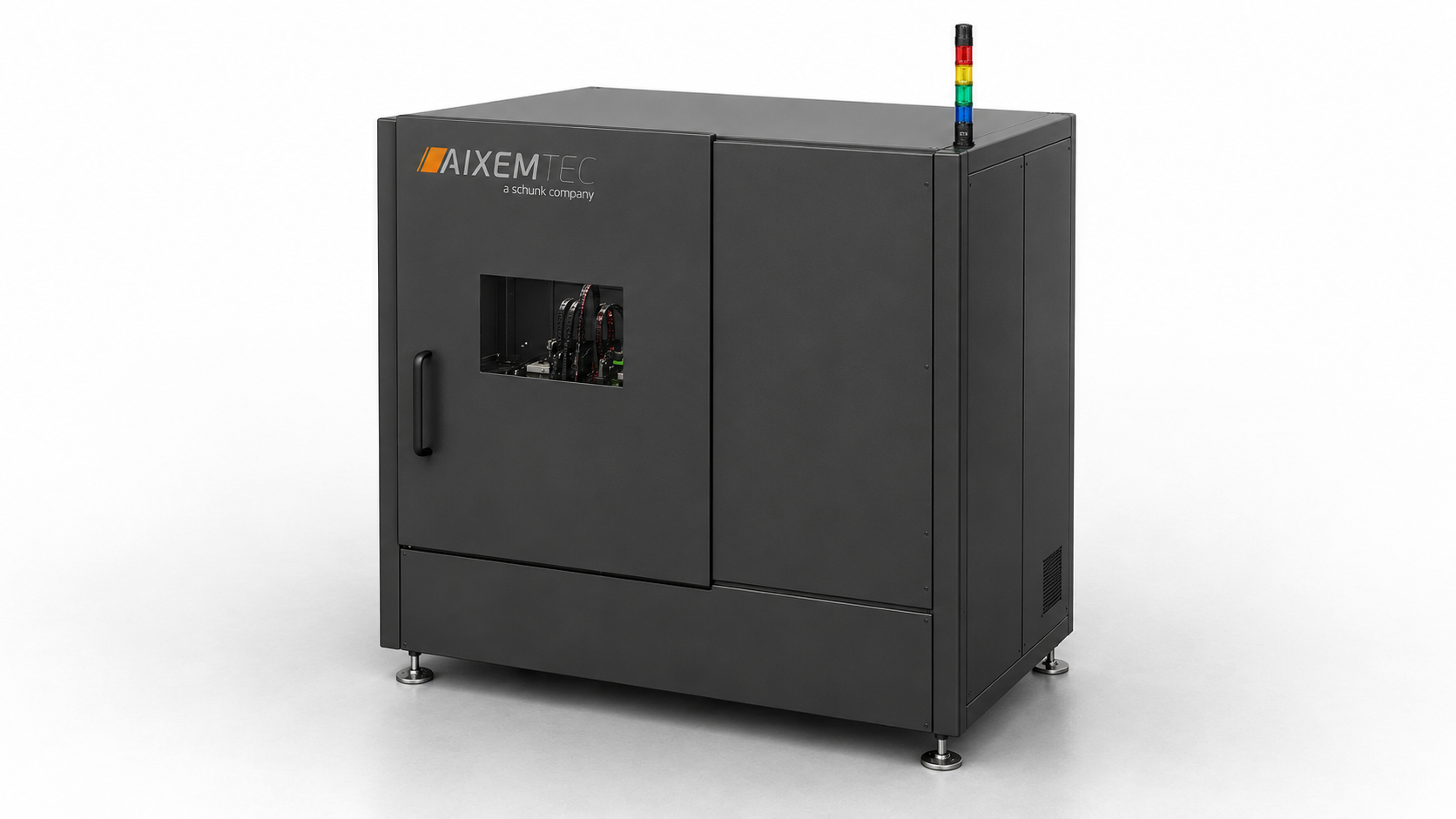
Automatic Optical Inspection (AOI)
6-DOF active alignment and attach for architecture-dependent optical-interface components such as FAUs, PMLA micro-optics, alignment plates (including cover-plate architectures), receptacles and related detachable interfaces.
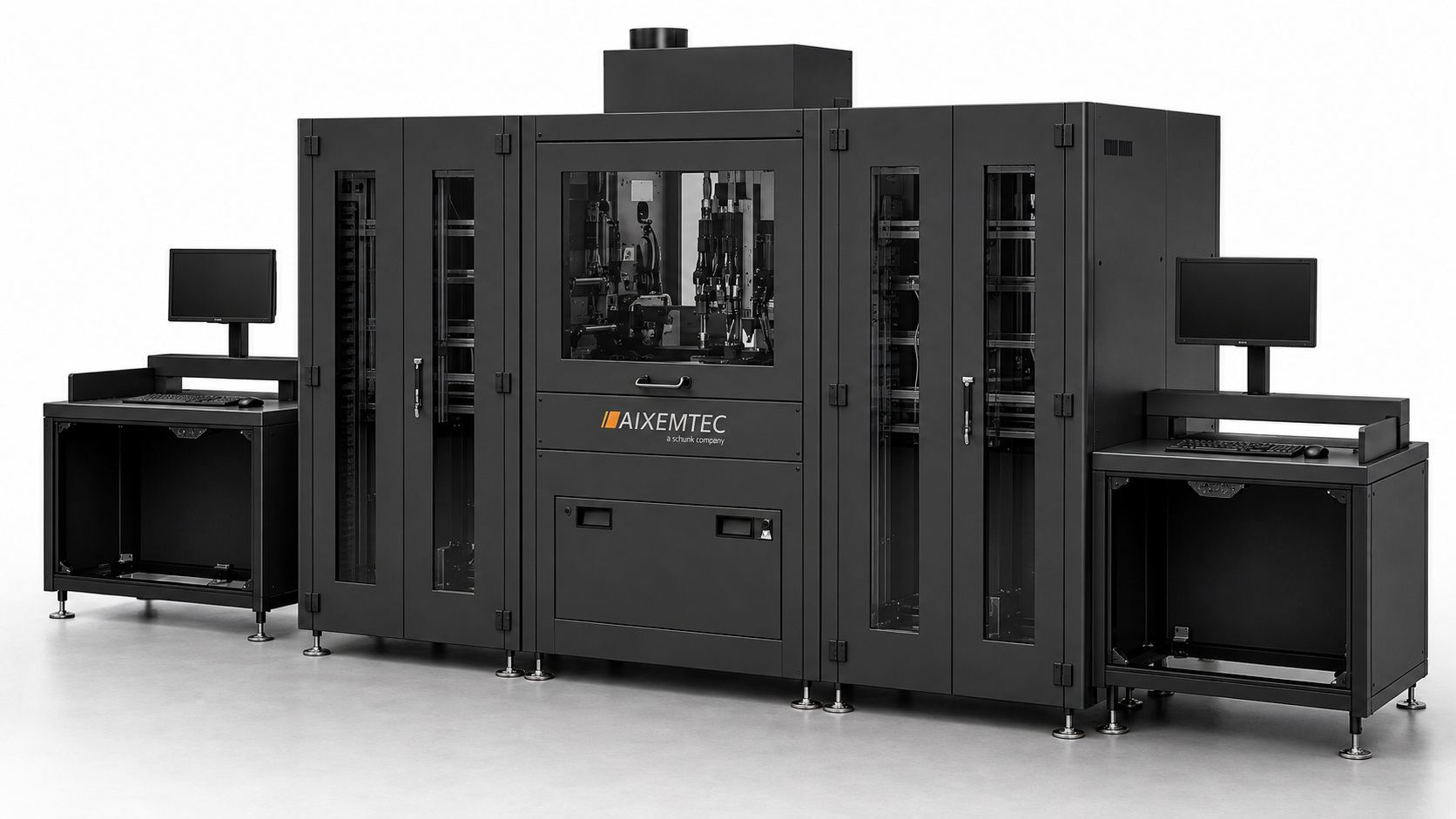
Active Alignment
Attachment of Multi-lens Arrays and similar components according to the customer specs.
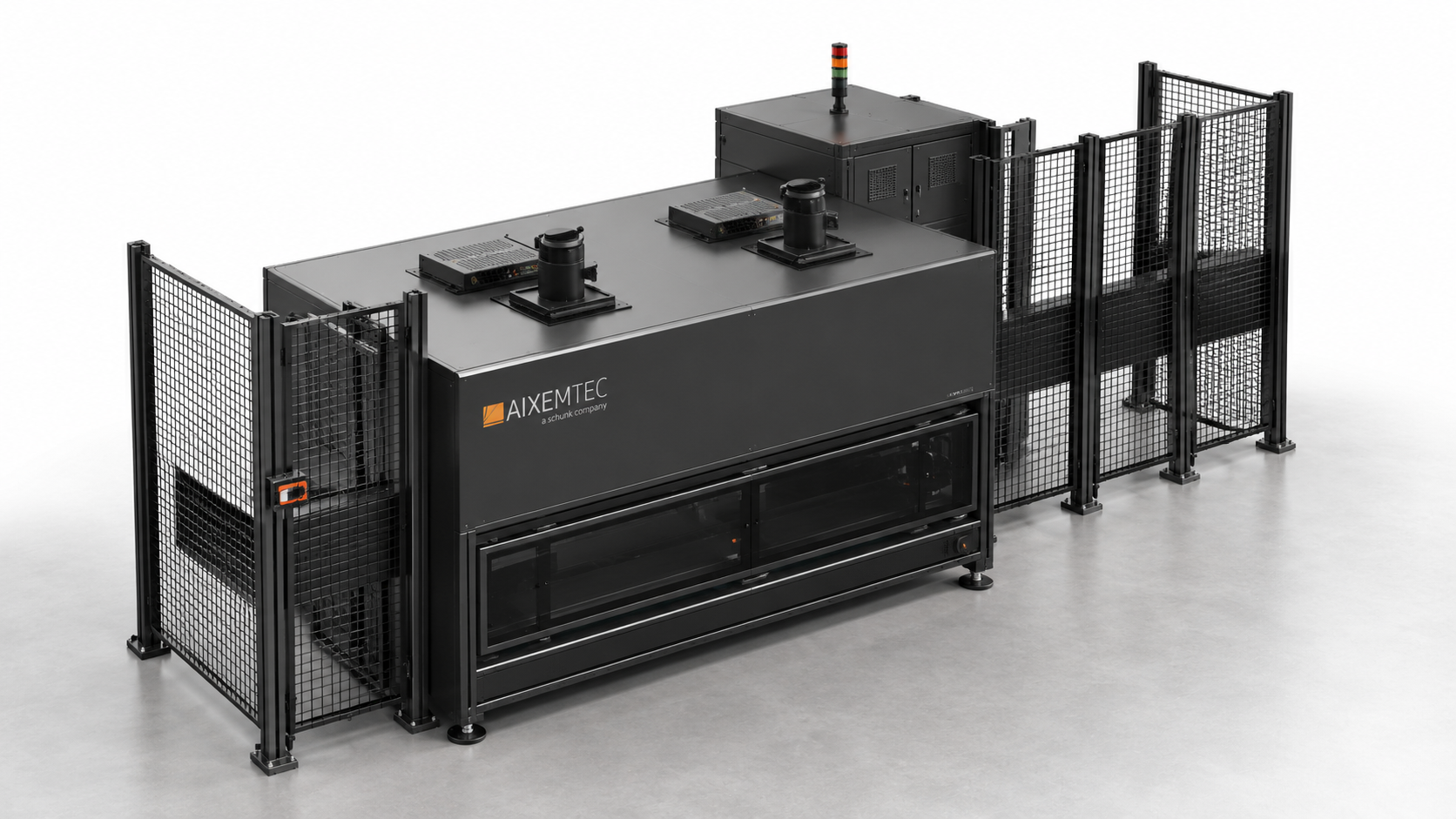
Thermal Curing
Specialized oven-curing for cable harnesses with precise temperature control.
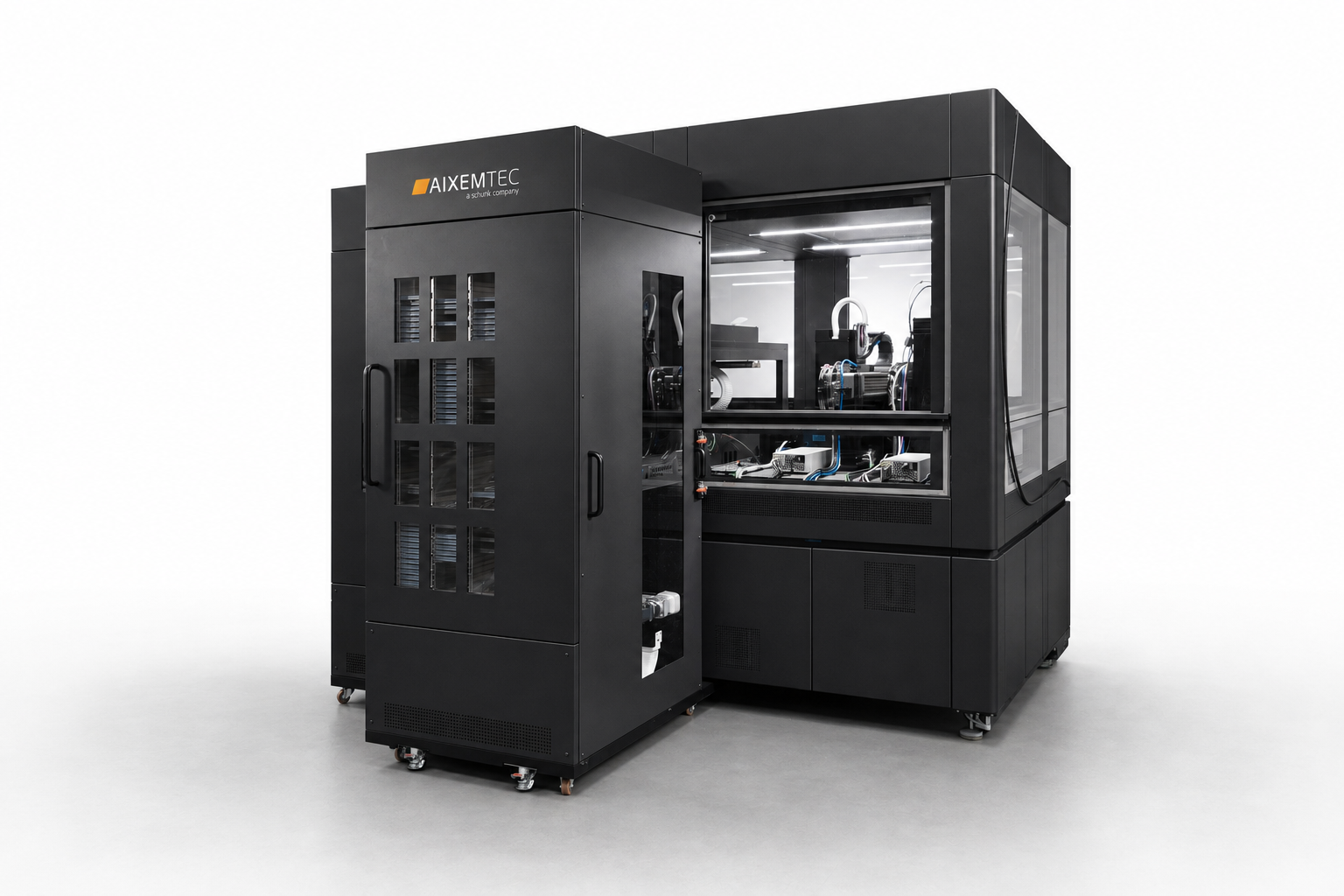
End-of-Line Testing
Optical verification of customer-defined quality metrics, with per-channel results and unit-level traceability for NPI, MP and HVM.
What makes the line fast and precise
Active alignment
Real-time multichannel optical feedback with closed-loop multi-axis control at the fiber-to-PIC / optical-engine interface.
Ultra-precision bonding
Adhesive dispensing, UV and thermal cure, shrinkage under full control.
Micro part handling
Micro-lens arrays, PMLA (prism microlens array) optics, 1D/2D FAUs, prisms, alignment plates and receptacle components handled and placed damage-free.
High-speed algorithms
First-light search and multi-axis optimisation in a few seconds.
MP / HVM shopfloor control
Synchronize qualified recipes and machine configurations across the shopfloor. Automatic recalibration — including vision systems and machine-specific offsets — compensates hardware differences between replicated machines, with unit traceability and SPC-ready process data.
Scale the process, not the risk
Capacity is added by multiplying alignment slots and replicating machines — not by re-engineering the process. Qualified recipes and machine configurations can be synchronized across the shopfloor, while automatic recalibration — including vision systems — compensates machine-specific hardware differences. This carries the optical-interface process from NPI into MP / HVM.
No Process transfer penalty
The recipe qualified on the first cell runs on the production machine. Your qualification effort is spent once.
Capacity defines steps
Throughput is reached by adding slots per machine and copying machines: a planning exercise, not a redesign.
Data from day one
Every unit measured in-process, per-unit data retained. The line that measured since the pilot holds the yield knowledge.
A specialist with a global industrial group behind it
Machine building and photonics since 2016, part of the Schunk Group. You get the responsiveness of a specialist and the durability of a global industrial group.
The optical-interface process chain
Inspection, alignment, bonding, curing and end-of-line test inside one group, including furnace technology from our sister company.
Made in Germany
Engineered and manufactured at our own facility near Aachen. A European group, relevant where non-Chinese equipment sources are required.
Worldwide service
64 locations in 26 countries, service engineers based in your region rather than flown in. Remote diagnostics and spare-parts depots.
Four steps, starting small
Most programms reach us the same way. Nothing in the first two steps commits you to equipment.